




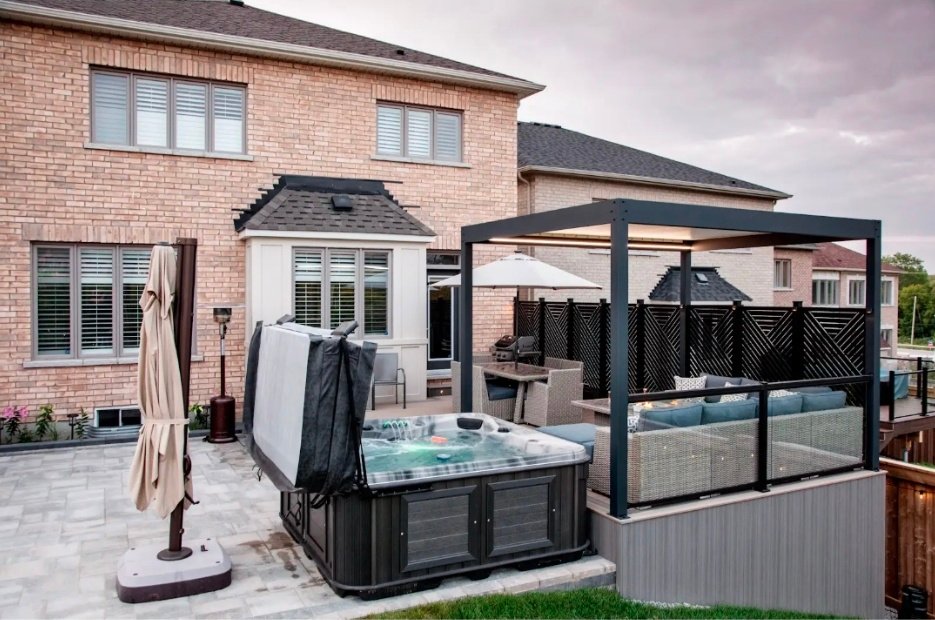
A pergola kit is a prefabricated structural system designed for accurate outdoor assembly. A pergola is an outdoor structure used to provide shade, limited weather protection, and special definition. Solar shading structures regulate sunlight exposure through fixed or adjustable overhead elements.
Types of Pergola Kits
Freestanding pergolas are self-contained kits consisting of individual vertical columns and horizontal beams that do not require support from existing buildings. These are erected on concrete footings or slabs.
The pergola kits, which are normally attached to the pergola, are fixed to a load-bearing wall using structural fasteners. The design helps reduce material use and enhances stability. The method can be used on patios, decks, and extensions.
Aluminum pergola kits are made from extruded profiles with close tolerances. This helps them retain dimensions accurately and resist corrosion, making them easy to assemble in a modular form.
Louvered pergola kits integrate adjustable roof systems with rotating slats. The roof angle controls sunlight, airflow, and rain penetration. Systems may be manual or motorized and require precise alignment during installation.
Material Overview
Aluminum is the dominant material for modern pergola kits. It does not corrode, warp, or absorb moisture. Powder-coated aluminum requires minimal maintenance and provides long-term structural stability.
Wood is used when visual integration with natural environments is required. Common options include cedar, larch, and thermally treated wood. Wood requires scheduled sealing, surface protection, and inspection to prevent degradation.
Steel offers high structural strength and resistance to wind loads. Outdoor steel pergolas must be galvanized or powder-coated. Increased mass requires reinforced foundations and higher anchoring capacity.
Vinyl (PVC) is moisture- and UV-resistant but offers limited structural stiffness and load capacity. Structural stiffness and load resistance are lower than those of metal-based systems.
Installation Tips
All components must be checked for adequacy and conformity with the installation manual prior to installation. The foundation must meet manufacturer’s specified load and anchoring requirements.
A level, rotary hammer drill, anchors for a structure, a torque wrench, and precise measuring tools are some of the tools needed for the task.
Anchoring must be performed on concrete slabs, footings, or engineered ground anchors. Soil-only installation without fixed anchoring is structurally unacceptable.
Assembly sequence is fixed: post anchoring, primary beam installation, cross-member fixation, and roof system assembly. Vertical alignment, beam level, and diagonal measurements must be verified at each stage.
Heavy structural elements require at least two installers. Safety procedures and fall protection must be applied during elevated work.
Maintenance After Installation
Routine maintenance equates to surface cleaning and inspection of structural components. Aluminum and steel parts are inspected for damage to their coating and fasteners.
Wooden structures are susceptible to cracking, moisture intrusion, and surface deterioration.
The fasteners and connection points should be checked annually. Louvered roof systems require periodic lubrication, inspection, and functional adjustment.
Pergola kits provide a controlled construction solution with defined structural performance. Correct material selection, compliant installation, and routine inspection ensure durability, load stability, and reduced long-term maintenance requirements.