



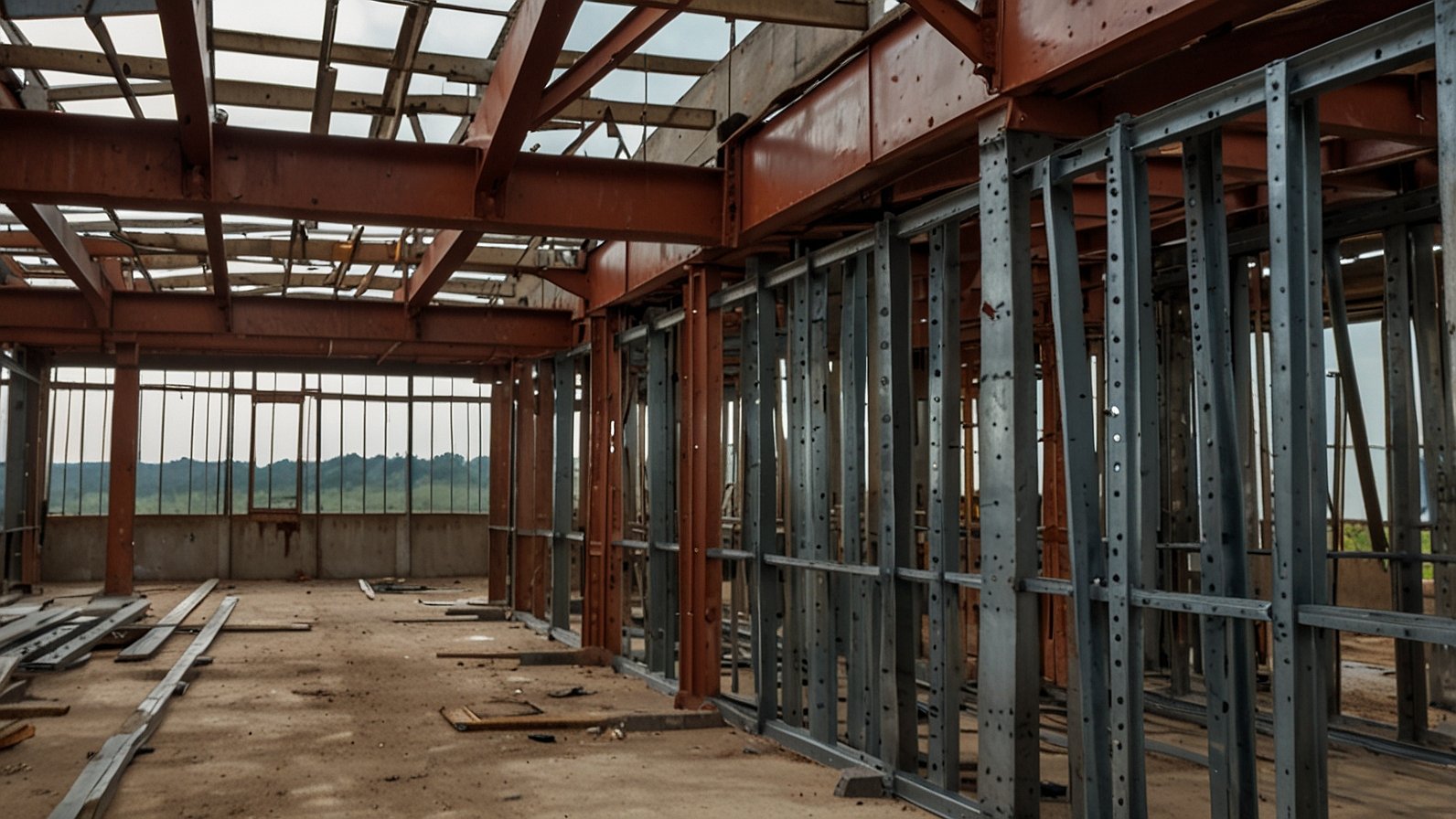
Walk through a new housing development today and you might notice something that looks different from the neighborhoods built ten or twenty years ago. Instead of the familiar rows of wooden studs, some builders are framing walls, floors, and roofs with light gauge steel. Steel frame construction has been the standard for commercial high-rises and industrial buildings for decades, but it is now making serious inroads in the residential market. The shift is not happening overnight, but the trend line is clear. As lumber prices remain volatile and building codes grow more demanding, homeowners and builders are looking at steel with fresh eyes. The quality of any steel-framed structure starts with what goes into it, which is why the relationship between a builder and their steel supplier matters just as much as the design on paper.
How Steel Framing Actually Works
If you are familiar with traditional wood framing, the concept behind steel framing is surprisingly similar. Light gauge steel studs replace wooden 2x4s and 2x6s in walls. Steel joists take the place of wooden floor joists. Steel trusses handle the roof. The components are manufactured to precise dimensions in a factory, then shipped to the job site where they are assembled using screws and fasteners rather than nails.
The key difference is consistency. Every steel stud is perfectly straight. It will not warp, twist, shrink, or split the way wood can over time. That dimensional stability means fewer callbacks, fewer drywall cracks, and fewer doors that suddenly will not close properly six months after move-in. For builders, that translates into less rework. For homeowners, it means a structure that stays true to its original dimensions for the life of the building.
The Steel vs. Wood Debate
Wood framing has been the backbone of American residential construction for over a century, and it still accounts for the vast majority of single-family homes built today. It is familiar, widely available, and most contractors already know how to work with it. So what is driving the conversation toward steel?
Cost stability is a big part of the answer. Lumber prices have been on a roller coaster since 2020, with spikes that added tens of thousands of dollars to the cost of a single home almost overnight. Steel prices fluctuate too, but the swings tend to be less dramatic, and the material cost for steel framing can run roughly 30% less than equivalent wood framing in many markets. When you factor in reduced waste, faster assembly times, and lower long-term maintenance, the total cost picture often favors steel even when the per-unit material price is comparable.
Then there are the performance advantages that wood simply cannot match. Steel does not burn. In a fire, a steel-framed wall maintains its structural integrity far longer than a wood-framed one, giving occupants more time to evacuate and giving firefighters a more predictable structure to work with. Steel is also immune to termites, carpenter ants, and wood-boring beetles. In regions where termite damage is a constant threat, that resistance alone can justify the switch.
Durability That Outlasts the Mortgage
One of the strongest arguments for steel frame construction is longevity. Steel studs are galvanized to prevent rust and corrosion, which means they hold up in humid climates, coastal environments, and flood-prone areas where moisture would compromise wood framing over time. A properly built steel-framed home will not develop the rot, mold, or structural degradation that plagues aging wood-framed houses in high-moisture regions.
The material also handles extreme weather better than most alternatives. Steel-framed structures can be engineered to withstand hurricane-force winds, seismic activity, and heavy snow loads. In states like Florida, Texas, and along the Gulf Coast, where building codes have tightened significantly after recent storm seasons, steel framing gives builders a straightforward path to meeting the most demanding structural requirements without layering on expensive supplemental reinforcements.
Why Steel Frame Construction Is Growing in Residential Markets
The numbers back up the trend. The U.S. steel framing industry reached $25.3 billion in 2025, and the walls segment alone is growing at a 3.8% annual rate. Meanwhile, modern methods of construction, which include steel framing, modular building, and panelized systems, are expanding at a 7.6% annual clip through 2031. The broader U.S. residential construction market is projected to grow from $1.35 trillion in 2025 to $1.76 trillion by 2031, and steel is capturing a larger share of that pie each year.
Several forces are accelerating adoption. Labor shortages continue to squeeze the construction industry, and steel framing requires fewer skilled carpenters because the components arrive pre-cut and ready to assemble. Sustainability requirements are pushing builders toward materials with higher recycled content, and structural steel today is made from roughly 88% recycled material. Insurance companies in storm-prone regions are also starting to offer favorable rates for steel-framed homes, recognizing the lower risk profile compared to wood.
What Homeowners Should Know Before Choosing Steel
Steel framing is not a drop-in replacement for every project. Thermal bridging, where heat transfers through the steel studs faster than it would through wood, requires proper insulation detailing. Builders experienced with steel know how to address this with exterior continuous insulation, thermal breaks, or insulated sheathing. Without these measures, energy performance can suffer, so it is important to work with a contractor who understands the material.
The source of the steel also matters more than most homeowners realize. Steel components fabricated to tight tolerances with consistent galvanization will perform differently over decades than parts produced with less precision. Builders who work with established, certified suppliers tend to report fewer fit-up issues on site and better long-term performance from the finished structure. Certifications from organizations like the American Institute of Steel Construction signal that a fabricator meets rigorous quality standards for structural work.
Design Flexibility You Might Not Expect
There is a common misconception that steel-framed homes look industrial or commercial. In reality, a steel-framed house looks exactly like any other home once the exterior cladding and interior finishes are in place. Brick, stone, stucco, siding, drywall, paint, and trim all attach to steel framing the same way they attach to wood.
Where steel really shines is in what it allows architecturally. Because steel has a higher strength-to-weight ratio than wood, it can span longer distances without intermediate supports. That means wider open floor plans, larger window openings, and more flexible interior layouts. For homeowners who want great rooms, vaulted ceilings, or open-concept living spaces, steel framing delivers those spans without the bulky headers and load-bearing walls that wood construction demands.
The Road Ahead
The residential construction industry is under pressure from every direction. Material costs are elevated, with steel and aluminum tariffs reaching effective rates not seen in decades. Skilled labor remains scarce. Climate-driven building codes are getting more stringent every year. In that environment, a framing system that resists fire, insects, and rot while offering faster assembly times and consistent quality has a natural competitive advantage.
Steel frame construction is not going to replace wood framing entirely. But the share it captures will keep growing as more builders gain experience with it, more homeowners learn about its benefits, and more insurance and code requirements tilt the math in its favor. For anyone planning a new build or a major renovation, understanding what steel framing brings to the table is worth the research. The material has earned its place in the conversation, and it is there to stay.
You May Also Like: How to Make Selling Your House a Stress-Free Process