






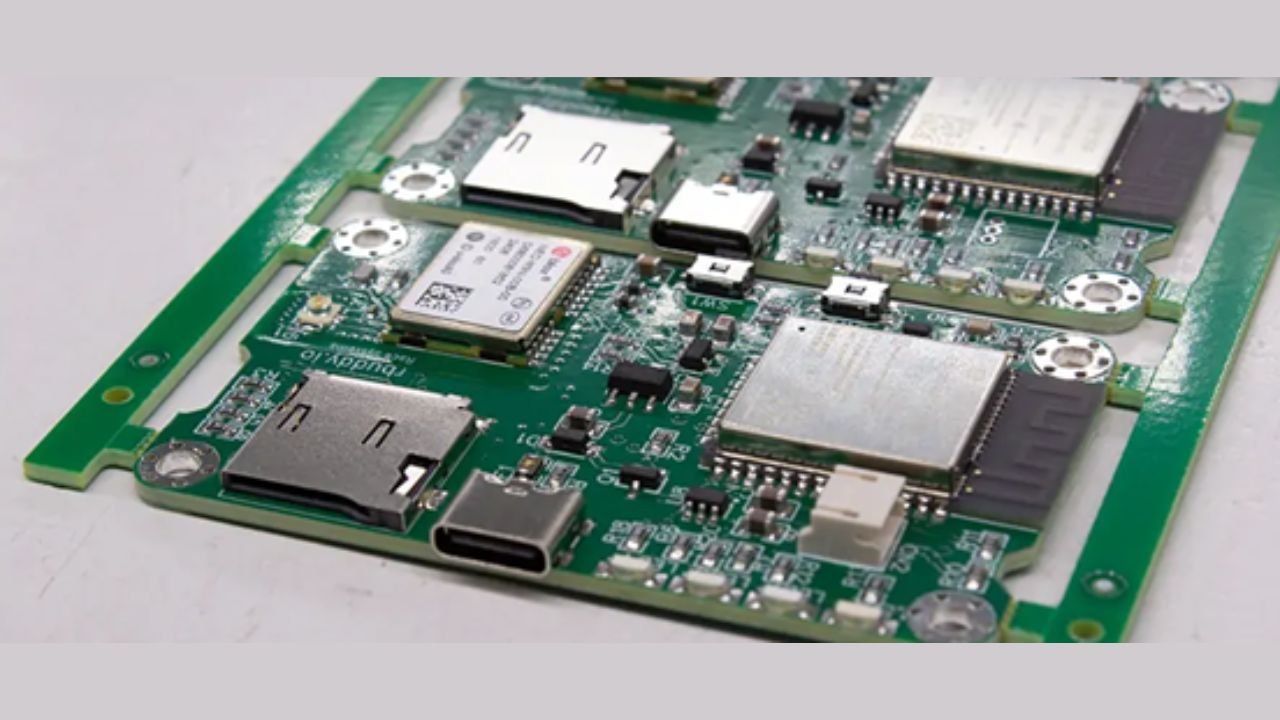
In industrial electronics, reliability is not a preference—it is a requirement. From harsh operating environments to long product lifecycles, industrial systems demand stable performance at every stage of production. As an experienced PCBA manufacturer, PCBasic integrates SMT process control with advanced PCB manufacturing standards to ensure that every board meets the durability, consistency, and traceability required for industrial applications.
Understanding Reliability Requirements in Industrial PCB Manufacturing
Industrial PCBs are commonly used in automation equipment, power control systems, industrial networking, energy storage, and process monitoring devices. These applications expose circuit boards to:
- Extended operating hours (often 24/7)
- Elevated temperatures and thermal cycling
- Vibration and mechanical stress
- Electrical noise and high current loads
- Long-term field deployment with minimal maintenance
High-reliability PCB manufacturing must therefore address material stability, process consistency, solder joint integrity, and electrical performance over time—not just initial functionality.
Controlled Material Selection for Industrial-Grade PCBs
PCBasic treats material selection as the foundation of reliability. For industrial PCB manufacturing, laminate systems are chosen based on thermal stability, mechanical strength, and electrical characteristics rather than cost alone.
Key considerations include:
- Glass transition temperature (Tg) matched to operating conditions
- Low thermal expansion to reduce stress on plated through-holes
- Stable dielectric properties for signal integrity
- Proven compatibility with lead-free assembly processes
All incoming materials undergo qualification and inspection to ensure consistency before entering production.
Precision PCB Fabrication with Process Stability
High-reliability PCB manufacturing depends on tight process control at every fabrication stage. PCBasic applies standardized manufacturing workflows to minimize variability and defect risk, including:
- Controlled copper thickness and etching accuracy
- Stable solder mask adhesion and uniform thickness
- Reliable surface finishes suitable for industrial assembly and rework
- Strict control of hole quality, plating thickness, and registration accuracy
These controls ensure mechanical robustness and electrical reliability throughout the PCB’s service life.
Industrial-Focused SMT Assembly Control
Surface mount assembly is a critical reliability factor for industrial PCBA. PCBasic applies industrial-grade SMT standards that prioritize solder joint consistency and long-term performance.
Reliability-focused SMT practices include:
- Optimized stencil design for consistent solder paste volume
- Profile-controlled reflow soldering to prevent thermal damage
- Closed-loop inspection using SPI and AOI systems
- Defect trend analysis to prevent repeat issues
This approach reduces risks such as cold joints, solder voids, and premature fatigue under thermal or vibration stress.
Multi-Stage Inspection and Testing Strategy
To ensure industrial reliability, PCBasic applies inspection and testing throughout the production cycle rather than relying on final inspection alone.
Typical quality checkpoints include:
- Incoming material inspection (IQC)
- Solder paste inspection (SPI)
- Automated optical inspection (AOI)
- X-ray inspection for hidden solder joints when required
- Electrical testing to verify connectivity and functionality
This layered inspection strategy improves defect detection while maintaining production efficiency.
Traceability and Process Accountability
Industrial customers often require full traceability for quality audits and long-term support. PCBasic maintains detailed production records covering:
- Material batches and component sourcing
- Process parameters and inspection results
- Assembly line history and testing data
This traceability enables rapid root-cause analysis and supports consistent quality across repeat production runs.
Supporting Long-Term Industrial Reliability
High-reliability PCB manufacturing is not achieved by a single process step. It results from the integration of material science, manufacturing discipline, assembly control, and quality systems. PCBasic’s industrial-focused approach ensures that PCBs are built not only to function today, but to remain stable and dependable throughout extended service lifecycles.
Conclusion
Industrial applications demand PCB manufacturing that prioritizes reliability, consistency, and traceability over short-term cost savings. By combining controlled material selection, stable fabrication processes, disciplined SMT assembly, and multi-stage quality control, PCBasic delivers PCB manufacturing solutions engineered for industrial environments where failure is not an option.
You May Also Like: The Hidden Value of Public Road Feeds: What Most Drivers Don’t Know