





What makes sure first responders can talk to each other when disaster strikes?
You might think the answer is walkie-talkies or rugged laptops. But modern emergency management technology looks a lot different than that.
In fact…it probably looks more like your phone’s home screen.
Here’s the thing.
Good technology isn’t just nice to have in emergency response – it can quite literally be the difference between life and death.
And if you work in emergency management, you know it.
In This Article:
- Emergency Management Tech Is Needed Now More Than Ever
- Mobile Command Units Are More Than Just Computers On Wheels
- Communication Tech Inside Emergency Management Systems
- Using Real-Time Information For Situational Awareness
- The Future Of Emergency Response Technology
Emergency Management Tech Is Needed Now More Than Ever
Emergency management technologies and systems are having to work harder than ever before.
Climate change is real, and weather-related disasters are continuing to rise year after year. In fact, NOAA recently reported there were 27 weather/climate disasters in the US in 2024 where the damage exceeded $1 billion. This is just one short of tying the record for most in a year.
Let that sink in.
27.
Disasters.
That required an emergency response from first responders.
First responders who needed to talk to each other.
Coordinate.
Make quick decisions.
Without technology to allow them to do their jobs… chaos would ensue.
And that’s exactly why a feature-rich mobile command unit design has become such a crucial investment for first responders. Instead of fighting disaster from hopelessly inadequate vehicles, command centers on wheels allow responders to bring the EOC straight to the scene.
It’s no surprise then that the Incident and Emergency Management Market size is expected to reach USD 217 billion by 2030 growing every year.
Mobile Command Units Are More Than Just Computers On Wheels
So what technology goes into these bad boys?
First off, lets make one thing clear: modern mobile command units are not your grandpa’s microwave on wheels.
A full featured command center builds out solutions using many different pieces of technology. And when you integrate them together effectively, the whole is far greater than the sum of its parts.
Technology you’ll usually see includes:
- Communication equipment
- Power generation supplies
- On-board computing and server technology
- Display monitors
- Operator workstations
When designed properly, a mobile command unit can operate as its own little emergency operations centre. You can drive it to practically anywhere and have everything you need to respond to a crisis.
Pretty wild when you think about.
Communication Tech Inside Emergency Management Systems
Now let’s talk about some of that communication technology.
First off, systems used today are nothing like the big radios of the past. While traditional LMR systems are not going anywhere, more and more agencies are requiring portable broadband to supplement their communications.
Enter 5G.
First responders are climbing on the 5G train left and right. The broadband capabilities allow for video streaming, high volume file sharing, and multiple device connections all at the same time.
Programs like FirstNet have been building out infrastructure to allow first responders to take advantage of 5G wherever they can get reception.
But there’s another problem that needs to be solved.
Different agencies use different technologies.
Fire departments, police departments, paramedics, federal agencies – they all may show up to the same emergency scene working on different communication systems. This makes it hard to coordinate responses when you can’t easily talk to each other.
That’s where mobile command units come in.
Equipped with a variety of communication solutions, command centers can act as a bridge for any and all agencies.
Technology you can expect to see includes:
- P25 digital & Analog radios
- Cellular (LTE, 5G)
- Satellite communications
- WiFi
Allows local, state, and federal agencies to plug into the same system and communicate with each other.
Using Real-Time Information For Situational Awareness
Information is useless if it never makes it to the person who needs it.
That’s why modern emergency management technologies focus on rapidly collecting, processing, and distributing info in real-time. Doing so allows agencies to maintain what is known as situational awareness.
On site mobile command units can now integrate live feeds from…
- Security cameras
- Drones
- Weather systems
- GPS trackers on responders and equipment
- Social media
- GIS mapping
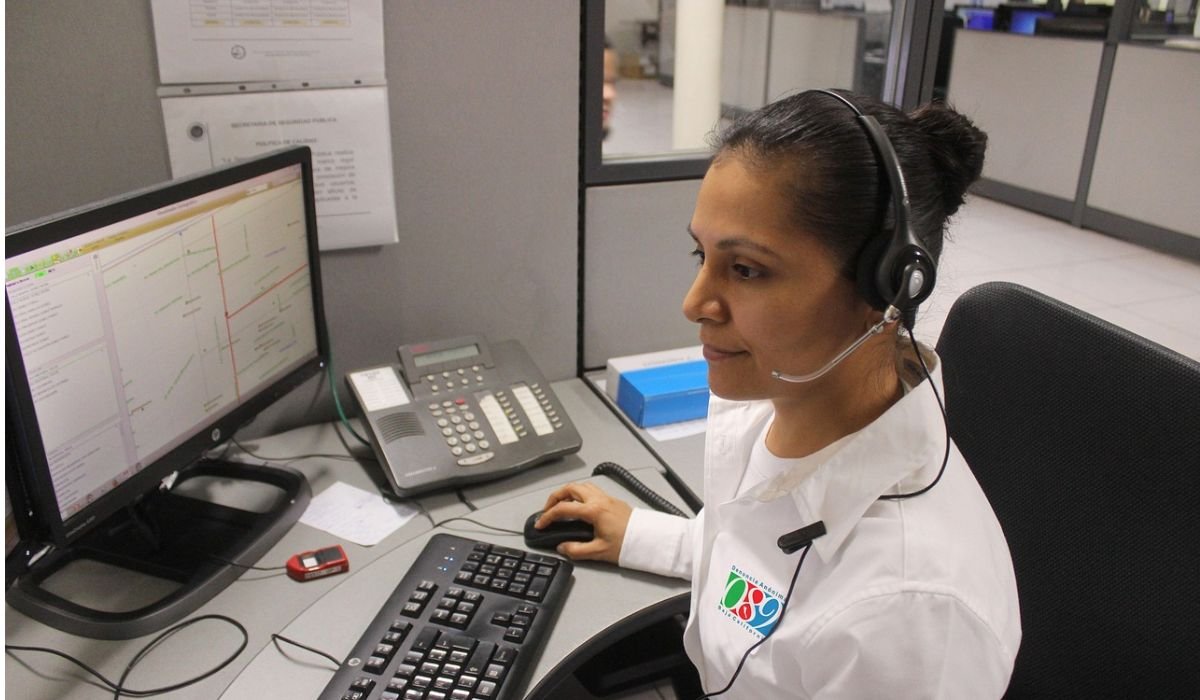
All of this information can be pulled into command center dashboards to give operators a live look at what’s going on. Not only do they know where their responders are at all times, they can see resource levels and live video of the emergency situation unfolding before them.
Want to know the really cool part?
A new market study reveals that over 45% of emergency management software systems now come with AI-powered predictive analytics. This means your software can actually anticipate where issues will occur before they become problems.
Take wildfires for example.
AI can process data from multiple feeds to predict where fire will spread based on wind speeds, humidity, and terrain data. Instead of responding after the fact, commanders can be proactive and position resources where they need to be.
Who knew computers could be so life saving?
The Future Of Emergency Response Technology
Want to take a wild guess at what the future of emergency management tech will involve?
If you said drone technology, artificial intelligence, and satellite connectivity, you’d be correct.
Drones.
Used for just about everything these days, drones are a prime tool for first responders. They can be used to fly into areas too dangerous for humans to navigate and still provide video and other intel back to command.
AI will continue to be utilized in new ways also. Analyzing incident patterns, managing resources, you name it.
Satellite has already become such a large component of comprehensive emergency management because there is no better backup than satellite communications. Terrestrial networks can go down in the blink of an eye during major incidents. Satellites guarantee you’ll stay online.
Even cool tech like augmented reality is starting to make its way into the space. Response teams are experimenting with technology that can overlay digital information on top of the real world.
The future is now, and first responders are ready for it.
Bringing It All Together
Modern emergency management involves a symphony of technologies and tools all working together with life saving as the end goal.
Good mobile command unit design will incorporate:
- Hardware and software for communications
- Equipment for sustaining power long-term
- Monitoring displays and multiple workstations
- Supplies for integrating technology like drones
Of course this is just the tip of the iceberg. Technologies will continue to evolve and respond agencies will continue to adopt new practices as they become available.
But for agencies looking to up their emergency management game, knowing your options is half the battle.
Want to learn more about how technology can save lives?
Contact experts in the industry and they’ll walk you through it.
YOU MAY ALSO LIKE: i Square – Lenovo EX Partnership Powering Smart Technology