






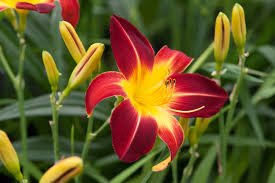
When a daylilies clump becomes congested, flowering can become less generous, the centre may thin out, and the plant starts using its energy to maintain old growth rather than producing strong new fans. That is why division matters. It is not simply a way to make more plants. It is one of the most practical ways to keep a planting healthy, productive and well placed in the garden.
Specialist advice is broadly consistent on timing. Daylilies are usually best divided either in early spring as fresh growth begins, or from late summer into early autumn once flowering has finished and while the soil is still workable. The best choice depends less on the calendar alone and more on what the plant is doing, what the soil is like, and how much time roots have to settle before real stress arrives. According to the premier grower of daylily plants https://swallowtail-daylilies.com/, gardeners looking at daylily plants for sale should think about division in the same practical way they think about planting: choose a moment when the plant can put its effort into rooting rather than blooming, and give each new piece enough moisture and space to establish quickly.
Why timing matters more with daylilies than many gardeners expect
Daylilies are forgiving perennials, which is part of their appeal in British gardens. They tolerate a range of soils, settle into mixed borders with little fuss, and return year after year with minimal intervention. That ease can create a false sense that division can be done whenever convenient. In reality, timing affects not only whether the plant survives the move, but how well it performs in the following season.
The reason is simple. A divided daylily needs to redirect energy towards making and repairing roots. If you lift and split a clump while it is in heavy growth or just about to flower, the plant is forced to manage root loss and top growth at the same time. That slows recovery. If you divide when the plant is naturally entering a phase better suited to root establishment, recovery is quicker and the plant is less likely to sulk.
This is why specialists often favour two windows. Early spring works because new growth is just beginning, so the plant has an entire growing season ahead to re-establish. Late summer to early autumn works because flowering is over, temperatures are often gentler than in midsummer, and the soil is still warm enough to encourage root activity. The common thread is that both windows reduce strain. They avoid the peak flowering period and give the plant a chance to settle before the next major challenge, whether that is summer heat or winter cold.
Timing also matters because British gardens are rarely uniform. A daylily in light soil in East Anglia may be ready for autumn division in conditions that would be too wet or too cold for a plant in heavier ground further north or west. Gardeners often ask for a single best month, but specialists tend to think in terms of conditions. Is the clump finished flowering? Is the soil friable rather than sticky? Is there enough time for roots to establish before hard weather? These questions are more useful than a date in isolation.
The practical lesson is that daylily division succeeds when it fits the plant’s growth cycle and the garden’s real conditions. That is why the best growers speak about windows, not rigid deadlines.
The best season to divide: early spring or late summer into autumn
For most gardens, the strongest answer is this: divide daylilies in early spring or in late summer to early autumn, with the exact choice based on local conditions and the state of the plant. That may sound less neat than a one-word answer, but it is more useful and more accurate.
Early spring division suits gardeners who prefer to reset borders before the season starts. As shoots emerge, it is easy to see where the plant is active without dealing with long, mature foliage. The weather is usually cooler, rainfall is often more reliable, and divisions have months ahead to establish before flowering and winter arrive. Spring is also a sensible choice in colder or wetter areas where autumn can close down quickly. If soil stays wet for long periods later in the year, spring can reduce the risk of newly divided plants sitting in cold ground before they root properly.
Late summer into early autumn is often regarded by experienced growers as the most efficient time, especially once flowering has finished. At that point the clump is easy to assess because you have just seen how well, or badly, it performed. A plant that produced fewer blooms, smaller flowers or crowded foliage is simple to identify. Soil is still warm, which encourages fresh rooting, and the plant is no longer pouring energy into opening flowers. This makes the post-flowering window especially valuable when the aim is to restore vigour.
There are limits to both seasons. Early spring can become awkward if growth is already advancing fast and dry weather arrives early. Autumn can be risky if the soil turns waterlogged or the first hard frosts come before divisions settle in. In both cases, the correct response is not to force the job into a narrow date range, but to watch the garden. Division is best done when the plant can recover calmly, not when the gardener finally finds an empty afternoon.
In practical British terms, many gardeners find spring division easiest when growth is only a few inches high, while autumn division is strongest once flowering has ended and there are still several weeks of workable soil ahead. That balance between plant stage and weather is what produces the best results.
Signs a clump is ready to be lifted and split
Gardeners often wait too long to divide daylilies because the plant is still alive and green. Survival, however, is not the same as performance. A clump can persist for years while steadily losing the qualities that made it worth planting in the first place. Knowing the warning signs is what prevents a routine maintenance task from becoming a rescue job.
The clearest sign is reduced flowering. A daylily that once flowered freely but now produces fewer stems or a shorter display is often telling you that the crown has become crowded. Another clue is when the centre of the clump starts to look tired or sparse, while the outer edge remains active. This pattern usually suggests the plant has been building outward for years and the older central material is past its best.
Congestion above ground often mirrors congestion below ground. When roots and crowns are tightly packed, water and nutrients are still being taken up, but the plant’s internal competition increases. Each fan has less room and the whole clump becomes less efficient. In a mixed border, that can also create an architectural problem. Daylilies begin to spill into neighbours, swallow smaller perennials, or sit in a misshapen lump that no longer suits the planting design.
Another useful sign is the plant’s age in the ground. Many daylilies do not need annual division, and that is one reason people like them. But a clump that has been undisturbed for several years and is clearly less floriferous is often ready. Some gardens need division more often than others because fertility, moisture and variety all affect growth rate. Fast-growing clumps in fertile soil can outpace slower varieties in leaner conditions.
There is also a design-based reason to divide. Specialist growers know that one of the easiest ways to improve a border is to repeat a good plant more widely rather than buying a large number of unrelated ones. A mature clump offers a chance to create that rhythm across a garden. Division is therefore not only maintenance. It is also editing. It allows the gardener to keep the variety they already know works well, while placing it more intelligently.
The best time to divide is often when the plant itself starts telling you it has moved from settled to crowded. Flowers, shape, density and age all provide the clues.
How specialists approach division for the highest success rate
The mechanics of dividing a daylily are straightforward, but the difference between a merely surviving division and a strong one lies in the way the job is handled. Specialist growers are not casual about the process, even with a robust perennial. They aim to reduce stress from the first spade cut to the final watering.
The first step is to water the clump beforehand if conditions are dry. Moist soil is easier to work and less damaging to roots than ground that is baked hard. The whole clump is then lifted with as much root as possible. Once out of the ground, excess soil can be shaken or washed away so the crowns are easier to see. Large old clumps are often more revealing when cleaned, because you can identify younger, stronger fans and discard exhausted central material.
Divisions should be generous enough to recover quickly. Small fragments may survive, but pieces with a healthy root system and a few good fans tend to re-establish more reliably than tiny slivers. This is especially true for gardeners who want a strong display rather than a slow increase. In late summer or early autumn, trimming foliage back can reduce water loss and make replanting easier.
Replanting depth matters. Crowns should not be buried too deeply, and roots should be spread naturally rather than crammed into a narrow hole. Good contact between roots and soil is more important than elaborate feeding at the start. Watering in thoroughly settles the plant and removes air pockets. After that, the focus should be on steady moisture while the division establishes, not constant disturbance.
Spacing is where specialists often differ from impatient gardeners. A freshly divided plant can look small in open ground, but it needs room to expand. Replanting divisions too close together simply recreates the congestion problem earlier than necessary. Thoughtful spacing makes maintenance easier and gives each clump the chance to form a handsome, balanced mound.
The final specialist habit is restraint. After division, gardeners can be tempted to keep checking, moving or feeding heavily. Daylilies generally respond better to a simpler regime: firm planting, enough water, decent soil, and time. The plant’s natural toughness then does the rest. Good division is not complicated, but it is most effective when done cleanly, calmly and at the right moment.
Mistakes that reduce flowering after division
When gardeners say a daylily never really recovered after division, the problem is often not division itself but poor timing or poor aftercare. The plant is resilient, yet there are predictable mistakes that reduce the following season’s display.
The first is dividing during active flowering or in hot, dry weather. This places maximum demand on a root system that has just been cut back. Even if the plant survives, it may spend the rest of the season simply coping. Another common error is dividing too late in autumn, when cold weather is already close and the ground is losing warmth. Roots need time to settle. Without that window, the plant enters winter underprepared.
A second mistake is replanting tired material from the middle of an old clump. The temptation is to keep everything because it feels wasteful to discard any living piece. Specialists are more selective. Old, weak crowns rarely justify the space. Replanting only the healthiest sections gives a better result and keeps the border cleaner.
Depth and drainage also matter. Daylilies like moisture-retentive but free-draining conditions. Put divisions into compacted or waterlogged ground and the roots struggle. Plant too deeply and the crown can sit sulking rather than growing away strongly. This is why site preparation still matters, even for a perennial with a reputation for toughness.
Another quiet cause of disappointment is unrealistic expectation. A freshly divided clump is not always going to flower at full strength immediately, especially if it was split into several pieces. Good establishment often comes before peak performance. Gardeners who understand this tend to manage daylilies better because they judge success over two seasons rather than two weeks.
Finally, there is the mistake of ignoring the border as a whole. A daylily can be divided at the right time and planted correctly, but still perform poorly if it is returned to a position that is too shaded, too crowded by neighbouring roots, or chronically dry in summer. Division improves vigour, but it cannot compensate for an unsuitable site forever. The best results come when division is used as a chance to reassess placement as well as plant health.
Using division to improve the whole garden, not just the plant
The most useful way to think about dividing daylilies is not as an isolated maintenance chore but as a design opportunity. Specialist growers often approach mature clumps with two questions at once: how can this plant be renewed, and how can the garden be improved by the pieces it yields?
Daylilies are particularly valuable in this respect because they combine reliability with variety. A strong clump can be turned into repeated planting along a path, used to stitch separate borders together, or moved to strengthen a weak part of the scheme. Rather than treating division as simple multiplication, it helps to see it as a way of making a garden more coherent. Repetition of a proven cultivar often gives more visual authority than buying several unrelated plants on impulse.
Division also allows for better matching between cultivar and setting. A tall variety with broad scapes may belong further back in a mixed border than where it was originally planted. A smaller one may be better near the front, where the detail of the flowers can be appreciated. By lifting and reworking clumps, gardeners can correct earlier decisions without spending heavily.
There is a practical economy in this too. Well-grown daylilies can supply enough divisions to extend a planting theme across a garden at relatively low cost. That does not remove the place for nurseries or new acquisitions, but it does mean that an established border often already contains material for improvement. A mature clump is an asset, not merely a plant that has got too big.
Most importantly, division keeps the border from becoming static. Ornamental gardens are not fixed compositions. They are living arrangements that need periodic editing. Daylilies respond well to this approach because they forgive disturbance when it is timed sensibly. That makes them one of the most workable perennials for gardeners who want a border that stays generous without becoming unruly.
The best moment to divide daylilies, then, is the moment when the plant can root without strain and the gardener can use the interruption wisely. Early spring and the late-summer-to-autumn window both offer that chance. Choose the season that suits your soil, your climate and the plant’s stage, divide firmly rather than timidly, and treat the task as part of shaping the garden. Done that way, division does more than refresh a clump. It restores performance, improves placement and keeps the whole planting moving in the right direction.