




Speeding is not only a traffic violation but also a leading contributor to car accidents across Texas. When a crash happens, and speeding is involved, questions about fault and compensation become more complicated for everyone affected. If you’re seeking legal guidance after a collision, a Houston speeding accident attorney can help clarify your rights and assist in navigating the claims process.
In Texas, determining fault after a car accident hinges on clear evidence and the specific actions of all drivers involved. Speeding increases the likelihood of accidents and often worsens injuries and property damage, thereby raising the legal stakes for both plaintiffs and defendants. Understanding how liability is assigned when speeding plays a role is essential for anyone involved in a Texas car accident. Establishing liability in these cases is rarely straightforward. Insurance companies and the courts consider speed a critical factor in reconstructing the accident, assessing driver behavior, and settling claims or awarding damages. Victims and drivers must be prepared to present thorough evidence of who was speeding and how that behavior contributed to the wreck. Reports show that nearly one-third of all fatal crashes nationwide can be linked to speeding, underscoring its widespread impact on traffic safety and liability claims. Knowing how to prove or defend against allegations of speeding is key for all parties following a crash.
Texas Law and Speeding Explained
Texas traffic laws define speeding as driving above the posted speed limit or exceeding the speed limit for specific road and weather conditions. Under Texas Transportation Code § 545.351, every motorist is required to operate vehicles at speeds that are reasonable and prudent under current conditions. Exceeding marked speed limits or failing to adjust speed for hazards can be considered negligence per se, making the offending driver presumptively at fault for causing a crash.
How Speeding Impacts Liability in Car Accident Cases
Texas follows a modified comparative fault system, also called proportionate responsibility. If a driver is found more than 50 percent at fault for causing an accident, they cannot recover any damages from the other parties involved. When speeding is proven, that behavior contributes to fault and may significantly decrease or bar any financial recovery for the speeding driver. For example, if one driver was speeding and another failed to yield, both may share fault. The jury or an insurance adjuster assigns a percentage of blame to each party. If the speeder is determined to be 60 percent at fault and the other driver 40 percent, the speeder recovers nothing, while the other party may recover limited damages for their losses.
Collecting and Presenting Evidence of Speeding
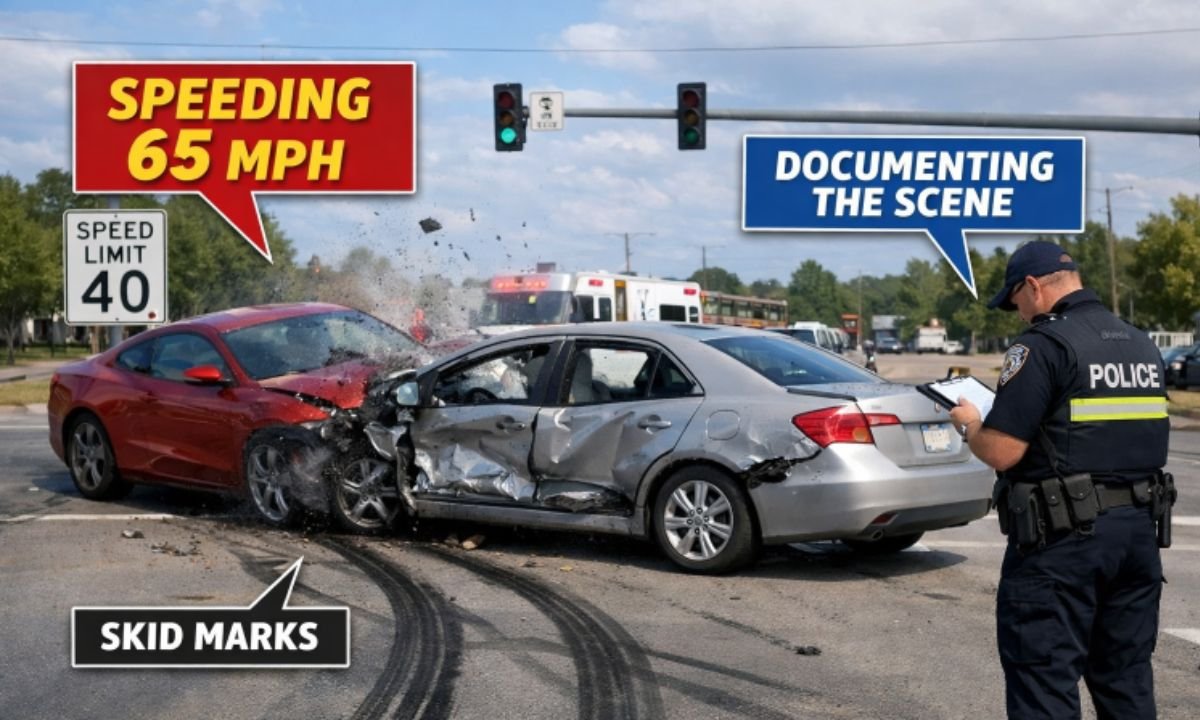
Proving that a driver was speeding requires credible evidence. Police accident reports often include officers’ observations and speed estimates based on physical evidence such as skid marks, vehicle damage, or eyewitness accounts. Surveillance footage, dashcams, and vehicle data recorders (often called “black boxes”) can provide objective evidence of how fast vehicles were traveling before the collision. In court, expert witnesses may use accident reconstruction techniques to illustrate how speeding contributed to the crash. Their analysis can be pivotal in persuading a judge or jury, particularly when physical proof or independent witnesses are available. Reliable evidence can make or break a claim involving alleged speeding.
Insurance Claims and Defenses Related to Speeding
Insurance companies rigorously scrutinize claims involving speeding because the risks and potential payouts are high. If an insurer suspects a policyholder was speeding, they may try to reduce or outright deny the claim by arguing that the policyholder was primarily at fault. Challenging these determinations often requires legal action and detailed counter-evidence, especially when both parties share some blame for the accident. Common defenses in speeding accident cases include disputing the accuracy of speed measurements, questioning witness reliability, or showing that another factor played a greater role in causing the crash. Documentation from the scene, including photographs, witness statements, and medical records, can be central in asserting or rebutting claims of liability.
Legal Assistance in Speeding Accident Cases
Navigating the complex legal landscape after a Texas car accident involving speeding requires strong advocacy and an in-depth understanding of state liability law. Experienced attorneys evaluate all evidence, negotiate with insurers, and, when necessary, take cases to court. They ensure that injury victims are treated fairly and receive full compensation for medical bills, lost wages, property damage, and pain and suffering. Pursuing or defending a speeding-related case in Texas demands swift, strategic action, especially since evidence can disappear and statements may change over time. Consulting with a knowledgeable attorney soon after a crash is the best way to protect your rights and improve the likelihood of a successful claim outcome.
Conclusion
Speeding is a key factor in determining liability in Texas car accident cases. Whether you are seeking compensation or defending against a claim, understanding how evidence, legal standards, and comparative fault rules apply is essential. With skilled legal guidance, drivers can navigate the aftermath of a speeding-related accident and work toward a fair resolution under Texas law.