


Metal conveyor belt systems are a practical choice for manufacturers that need reliable material handling, long service life, and consistent production. But what makes them better suited to some applications than plastic or fabric belts? The answer often comes down to temperature, hygiene, load, airflow, durability, and the demands of the process. A strong example is Wire Belt Company, which has decades of experience designing and manufacturing specialized conveyor belts and complete conveying systems for food processing and industrial applications. The company provides custom solutions, technical support, belt surveys, training, and maintenance tools designed to help businesses improve efficiency, reduce downtime, extend equipment life, and optimize conveyor performance.
What Is a Metal Conveyor Belt?
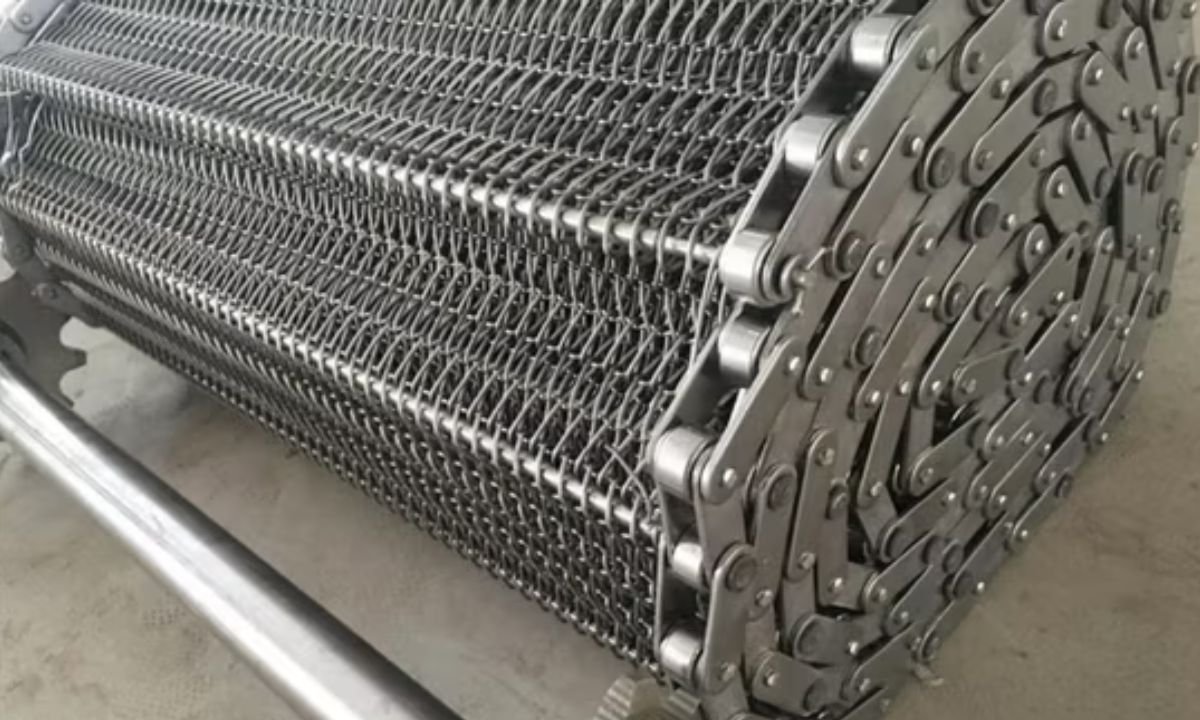
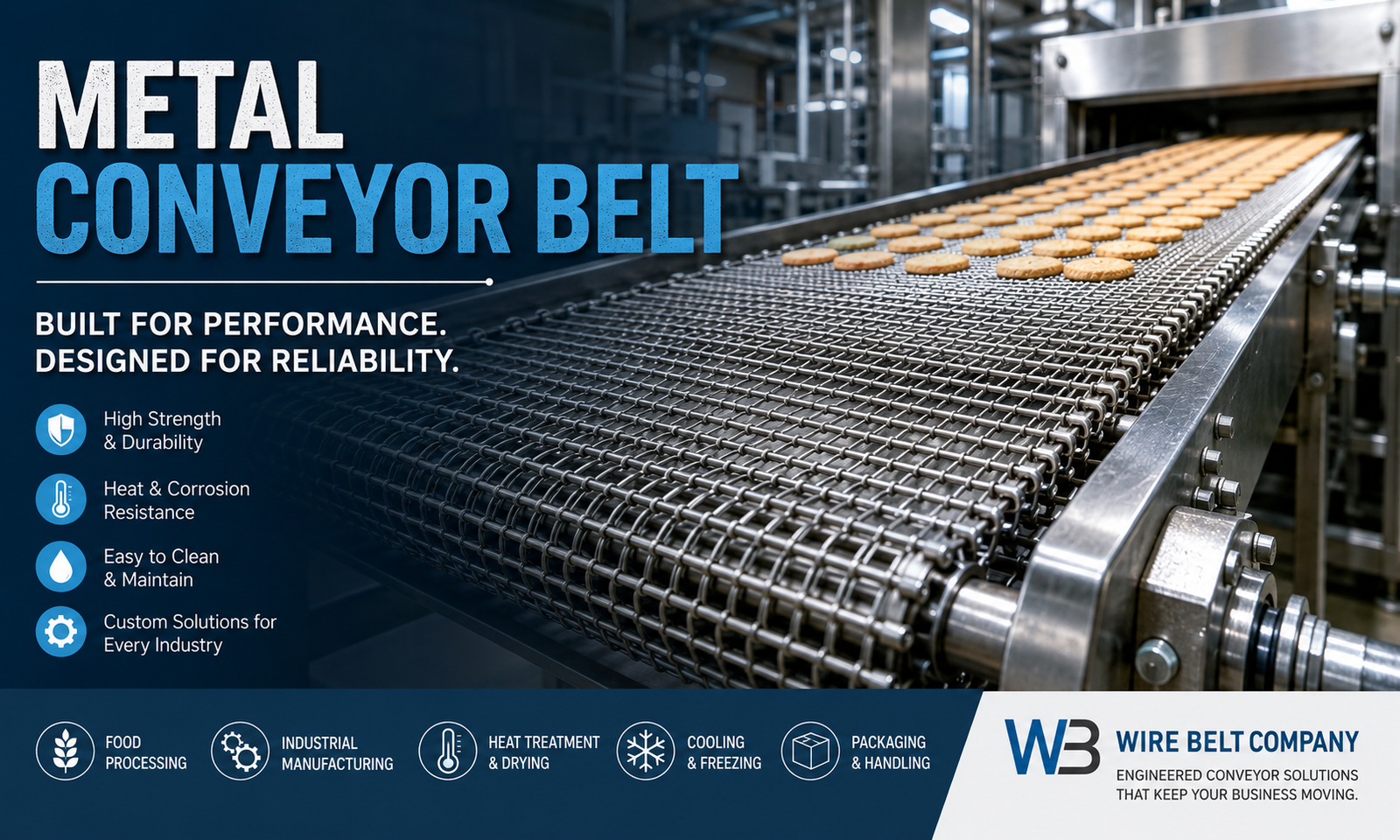
A metal conveyor belt is a continuous conveying surface made primarily from materials such as stainless steel or other engineered metals. It moves products, components, or raw materials through different stages of a production or handling process.
Unlike conventional fabric belts, metal belts can withstand demanding operating conditions. They are especially useful where heat, moisture, frequent cleaning, heavy loads, or mechanical stress could shorten the life of other belt materials.
Modern metal conveyor belt designs are available in several configurations, including:
- Wire mesh belts
- Flat wire belts
- Balanced weave belts
- Chain-driven belts
- Metal modular belts
- Heavy-duty metal belts
- Specialty belts for curves, inclines, and product positioning
The right design depends on what you are transporting and how the conveyor will operate.
For example, a bakery may need excellent airflow for cooling, while an industrial heat-treatment line may require a belt capable of operating at elevated temperatures. A food processor may prioritize sanitation and cleanability above everything else.
Why Choose a Metal Conveyor Belt System?
A conveyor is more than a belt. It is part of a larger material handling solution that includes the belt, drive system, sprockets, rollers, frame, supports, transfers, controls, and safety equipment.
When these components are correctly matched, a metal conveyor belt can provide several important benefits.
Durability in Demanding Environments
Metal construction provides excellent resistance to mechanical stress. This makes metal belting suitable for applications involving heavy products, repeated loading, high temperatures, and frequent production cycles.
Stainless steel is also resistant to corrosion, making it a popular choice where moisture and regular washdowns are part of daily operations.
Better Temperature Resistance
Some production processes involve baking, frying, heating, drying, freezing, or heat treatment. These conditions can place significant stress on conventional belt materials.
Metal conveyor belts can be designed for such environments, allowing products to move through heating and cooling processes without relying on materials that may degrade quickly.
Improved Hygiene
Food processing facilities need conveyor systems that can be cleaned efficiently and inspected easily.
Open mesh metal belts provide spaces through which air, water, and cleaning solutions can pass. This can support efficient sanitation and help reduce material buildup.
Wire Belt Company, for example, offers stainless steel conveyor belts designed for food processing applications where hygiene, airflow, and reliable product handling are important.
Wire Mesh Belt Conveyor Applications
A wire mesh belt conveyor can be particularly useful when airflow, drainage, heating, cooling, or cleaning is important.
The open structure allows air to move through the belt instead of forcing it to travel only around the product. That feature makes wire mesh conveying valuable in processes such as:
- Baking
- Frying
- Cooling
- Freezing
- Drying
- Washing
- Coating
- Enrobing
- Heat treatment
- Product inspection
- Industrial component handling
For example, an open mesh belt can carry baked goods through a cooling tunnel while allowing air to circulate around the products. In another application, the same basic concept can help move industrial components through a drying or heat-treatment process.
Wire Belt’s Flat-Flex belt is one example of an open mesh design. The company states that some configurations can provide up to 86% open area, supporting airflow in heating, cooling, drying, frying, and freezing applications.
Common Metal Conveyor Belt Materials
Selecting the right material is one of the most important decisions when designing a conveyor.
Stainless Steel
Stainless steel is widely used in food processing because of its corrosion resistance, durability, and suitability for demanding cleaning environments.
It is also useful in applications where temperature and moisture are major concerns.
Carbon Steel
Carbon steel can be appropriate for certain industrial applications where corrosion resistance is less critical and the operating environment is controlled.
The choice should always consider the actual process conditions rather than simply the initial purchase price.
Specialty Alloys
Some environments require specialized materials that provide improved resistance to heat, corrosion, chemicals, or wear.
The correct alloy can increase the useful life of a belt, particularly when ordinary stainless steel does not meet the application’s requirements.
Types of Metal Conveyor Belts
There is no single metal belt that works for every production line. Different designs solve different material handling problems.
Open Mesh Conveyor Belts
Open mesh designs are ideal for applications where airflow, drainage, or easy cleaning is important.
They are commonly used in food processing, baking, cooling, drying, and industrial processes.
Heavy-Duty Metal Belts
Heavy-duty metal conveyor belts are designed for applications involving large loads, impact, or harsh operating environments.
Wire Belt’s Eye-Flex is one example of a heavy-duty modular metal belt designed for demanding applications, including heavy loads, industrial ovens, freezers, washers, and food processing environments.
Modular Metal Conveyor Belts
Modular systems can simplify repairs because individual components or sections may be replaced rather than removing an entire conveyor system.
This can be particularly useful in facilities where maintenance time directly affects production output.
Curved Conveyor Belts
Some production layouts require products to change direction without stopping the line.
Specialized systems such as curved conveyors can maintain product movement through turns while reducing the need for additional manual transfers.
Wire Belt’s Flex-Turn systems are designed for product transfer around curves while maintaining product orientation and spacing.
Metal Conveyor Belt for Food Processing
Food processing is one of the most demanding environments for conveyor equipment.
A conveyor may be exposed to water, oils, food particles, cleaning chemicals, high temperatures, freezing conditions, and repeated sanitation cycles.
That is why food processors often look for a food grade conveyor belt that combines:
- Corrosion resistance
- Easy cleaning
- Reliable tracking
- Suitable belt openings
- Product stability
- Appropriate temperature resistance
- Strong mechanical performance
- Hygienic construction
An open stainless steel conveyor can also provide excellent airflow, which is important for baking, cooling, frying, freezing, and drying.
Wire Belt’s Versa-Link is an example of a stainless steel food processing belt designed around sanitation and rapid installation. Its manufacturer states that it can be joined in as little as 30 seconds without special tools and offers up to 81% open area in applicable configurations.
Material Handling Solutions Beyond the Belt
Choosing the belt is only one part of the project.
A successful material handling solution should consider the entire movement of the product from one process to another.
Important factors include:
- Product weight
- Product dimensions
- Required conveyor speed
- Belt width
- Operating temperature
- Cleaning requirements
- Required airflow
- Incline or decline
- Transfer points
- Available floor space
- Expected production volume
- Maintenance access
- Safety requirements
Ignoring any of these factors can lead to poor tracking, excessive wear, product damage, or unnecessary downtime.
A properly engineered system, on the other hand, can create a smoother production flow and reduce the number of manual handling steps.
How Custom Conveyor Design Improves Efficiency
Standard equipment may look attractive because it can be easier to purchase. However, a standard belt is not always the best fit for a specific production process.
A custom metal conveyor belt can be designed around the actual product and operating environment.
For example, the belt may need:
- A specific width
- A particular wire diameter
- Different mesh openings
- Special edge configurations
- Increased strength
- Tight product transfers
- Curved movement
- Inclined conveying
- Special sprockets
- Custom conveyor dimensions
Wire Belt Company states that its belts can be configured according to application requirements, including belt size, material, and performance needs. Its conveyor systems are also engineered for specific production environments.
This application-first approach can help prevent a common mistake: buying a belt first and trying to make the production line work around it.
Reducing Conveyor Downtime
Unexpected conveyor downtime can affect more than the conveyor itself.
When one conveyor stops, upstream equipment may continue producing material that has nowhere to go. Downstream equipment may also sit idle.
The result can include:
- Lost production
- Additional labor costs
- Delayed orders
- Product waste
- Emergency repair expenses
- Reduced equipment utilization
Preventive maintenance is therefore a major part of conveyor performance.
Simple inspections can identify developing problems before they become production failures.
Look for:
- Damaged belt sections
- Worn sprockets
- Poor alignment
- Loose components
- Abnormal belt tension
- Product buildup
- Unusual noise
- Excessive vibration
- Tracking problems
Regular inspection is usually much easier and less expensive than dealing with an unexpected line stoppage.
Conveyor Belt Maintenance Tips
Even a high-quality metal belt needs proper care.
Start with regular cleaning and visual inspections. Remove product buildup before it affects belt movement or components.
Next, inspect the drive system. Sprockets, rollers, bearings, and related components should be checked according to the manufacturer’s recommendations.
It is also important to avoid excessive belt tension. Too much tension can increase stress on the belt and conveyor components.
Wire Belt notes that metal conveyor belts have a finite service life, but many failures occur because of factors unrelated to the basic strength of the belt. Proper setup, inspection, and maintenance can therefore play an important role in avoiding premature failures.
Use the Right Maintenance Tools
Maintenance becomes easier when technicians have the correct tools for joining, removing, repairing, and installing the belt.
Wire Belt offers dedicated belt maintenance tools and joining accessories designed for metal conveyor systems.
The practical goal is simple: make routine maintenance faster so small problems do not turn into major production interruptions.
Belt Surveys and Technical Support
Sometimes the problem is not obvious.
A conveyor may be experiencing repeated belt failures, uneven tracking, product damage, or excessive wear without a clear cause.
This is where a belt survey or technical assessment can be valuable.
A qualified conveyor specialist can review areas such as:
- Belt condition
- Conveyor alignment
- Drive components
- Belt tension
- Product loading
- Transfer points
- Operating speed
- Cleaning procedures
- Maintenance practices
The result can be a clearer understanding of why the system is underperforming and what should change.
Technical support and operator training can also help maintenance teams understand correct installation, joining, tensioning, tracking, and inspection procedures. Wire Belt confirms that onsite training programs are available through its representatives.
How to Select the Right Metal Conveyor Belt
Choosing a belt should begin with the application, not the product catalog.
Ask these questions before making a decision:
What product will the belt carry?
Consider its weight, size, shape, temperature, surface characteristics, and fragility.
What conditions will the belt face?
Determine whether the system will operate in heat, cold, moisture, washdown, chemicals, or abrasive conditions.
Does the process require airflow?
If products must be cooled, dried, heated, or frozen, an open mesh design may offer important advantages.
How much maintenance downtime is acceptable?
If rapid belt replacement is important, a design that simplifies joining and installation may provide significant operational value.
Does the conveyor need customization?
A custom belt may be appropriate when the production line has unusual dimensions, transfers, loads, curves, or processing requirements.
What is the expected production volume?
Higher production rates generally increase the importance of reliable tracking, appropriate belt construction, correct drive components, and preventive maintenance.
Metal Conveyor Belt vs Plastic Conveyor Belt
Both metal and plastic belts have useful applications. The better choice depends on the process.
| Factor | Metal Conveyor Belt | Plastic Conveyor Belt |
|---|---|---|
| High-temperature use | Excellent for many applications | More limited |
| Corrosion resistance | Excellent with suitable materials | Often excellent |
| Airflow | Excellent with open mesh designs | Depends on design |
| Heavy-duty use | Strong option | Depends on belt type |
| Food processing | Widely used | Also widely used |
| Frequent washdown | Suitable with correct material and design | Suitable for many applications |
| Heat treatment | Often preferred | Usually less suitable |
| Product handling | Highly customizable | Highly customizable |
| Maintenance | Requires proper inspection | Requires proper inspection |
The goal should not be to automatically choose metal. Instead, compare the belt material against the actual operating conditions.
Common Mistakes to Avoid
A conveyor system can become expensive when the original design does not match the process.
One common mistake is selecting a belt based only on its load rating. Load is important, but temperature, cleaning, speed, product size, airflow, and belt configuration can be equally important.
Another mistake is overlooking the drive components. A good belt cannot compensate for poorly matched sprockets, alignment, or conveyor construction.
A third mistake is treating maintenance as an afterthought.
Instead, plan maintenance access into the original conveyor design. Technicians should be able to inspect, clean, remove, join, and repair the belt without unnecessary disruption.
Finally, do not ignore the transfer points. Poor transfers can damage products and create bottlenecks even when the main conveyor is working perfectly.
When Is a Metal Conveyor Belt the Best Choice?
A metal conveyor belt is worth considering when your application demands a combination of durability, temperature resistance, hygiene, airflow, or mechanical strength.
It can be particularly valuable for:
- Food processing plants
- Bakeries
- Meat and poultry processing
- Industrial ovens
- Freezing systems
- Drying equipment
- Washing systems
- Automotive manufacturing
- Electronics handling
- Packaging operations
- Heat-treatment processes
Wire Belt reports applications across food processing, pharmaceutical, cosmetic, electronics, environmental services, automotive, textiles, and agriculture.
That broad range demonstrates why metal belting should be viewed as an engineered material handling solution rather than simply a replacement for another type of belt.
The Future of Efficient Material Handling
Modern manufacturing is under constant pressure to produce more while reducing waste, labor, and downtime.
Conveyor systems are central to that goal.
The best systems combine reliable belts with thoughtful engineering, suitable drive components, preventive maintenance, and ongoing technical support.
Automation can also make conveyor systems more valuable. Sensors, monitoring equipment, automated controls, and data-driven maintenance can help operators identify performance changes before they result in major failures.
However, technology does not replace good mechanical design. A poorly selected belt remains a problem even when sophisticated controls are added around it.
The strongest approach is to start with the application, select the right belt and components, then build maintenance and performance monitoring into the system from the beginning.
Conclusion
A metal conveyor belt can provide a dependable foundation for demanding material handling applications, especially where heat, moisture, hygiene, heavy loads, airflow, and long operating cycles matter.
The key is choosing the right belt for the actual process. Open mesh designs can support cooling, drying, heating, and cleaning, while heavy-duty configurations can handle demanding loads and harsh environments.
Companies such as Wire Belt Company demonstrate the value of combining belt manufacturing with engineering expertise, custom conveyor design, technical support, training, belt surveys, and maintenance solutions.
If your current conveyor is causing repeated downtime, excessive wear, difficult cleaning, or inconsistent product handling, it may be time to evaluate the complete system rather than simply replacing the belt. A properly engineered conveyor solution can improve efficiency, protect product quality, reduce maintenance interruptions, and deliver better long-term value.
FAQ
What is a metal conveyor belt used for?
A metal conveyor belt is used to transport products and materials through manufacturing, processing, packaging, heating, cooling, drying, washing, and other industrial operations.
What are the main advantages of metal conveyor belts?
The main advantages include durability, temperature resistance, corrosion resistance, excellent airflow in open mesh designs, cleanability, and suitability for demanding industrial and food processing environments.
Are metal conveyor belts suitable for food processing?
Yes. Stainless steel metal belts are widely used in food processing applications, including baking, frying, cooling, freezing, coating, and washing. The appropriate belt must be selected according to the product and sanitation requirements.
What is a wire mesh belt conveyor?
A wire mesh belt conveyor uses an open metal structure to transport products while allowing air, water, and other materials to pass through the belt. This makes it useful for heating, cooling, drying, frying, freezing, and washing.
How long does a metal conveyor belt last?
Service life varies significantly based on belt design, material, load, speed, temperature, alignment, cleaning, maintenance, and operating conditions. Correct installation and preventive maintenance can help avoid premature failure.
How do I choose the right metal conveyor belt?
Start by evaluating the product, load, temperature, belt speed, required airflow, cleaning process, conveyor dimensions, operating environment, and maintenance requirements. A conveyor specialist can help match the belt to the application.
Can metal conveyor belts be customized?
Yes. Metal belts can be customized in areas such as width, wire diameter, pitch, mesh configuration, material, edge style, strength, and overall conveyor configuration.
How can conveyor downtime be reduced?
Regular inspections, correct alignment, suitable tension, timely replacement of worn components, proper cleaning, operator training, and preventive maintenance can all help reduce unplanned downtime.
Are metal conveyor belts better than plastic belts?
Not in every application. Metal belts are often advantageous in high-temperature, heavy-duty, hygienic, or high-airflow applications. Plastic belts may be more suitable for other processes. The best choice depends on the operating conditions.
What does conveyor belt technical support include?
Technical support can include belt selection, application assessment, installation guidance, maintenance advice, belt surveys, training, and help identifying causes of premature wear or downtime.